Need a quotation?

Dear Customers, if you wish to receive a quotation, we kindly ask you to fill in below form. Once the form has been duly filled and submitted, the rates will be quoted to you.

    SEARCH SITE BY TYPING (ESC TO CLOSE)

    Skip to Content

    About: reefshipping

    Recent Posts by reefshipping

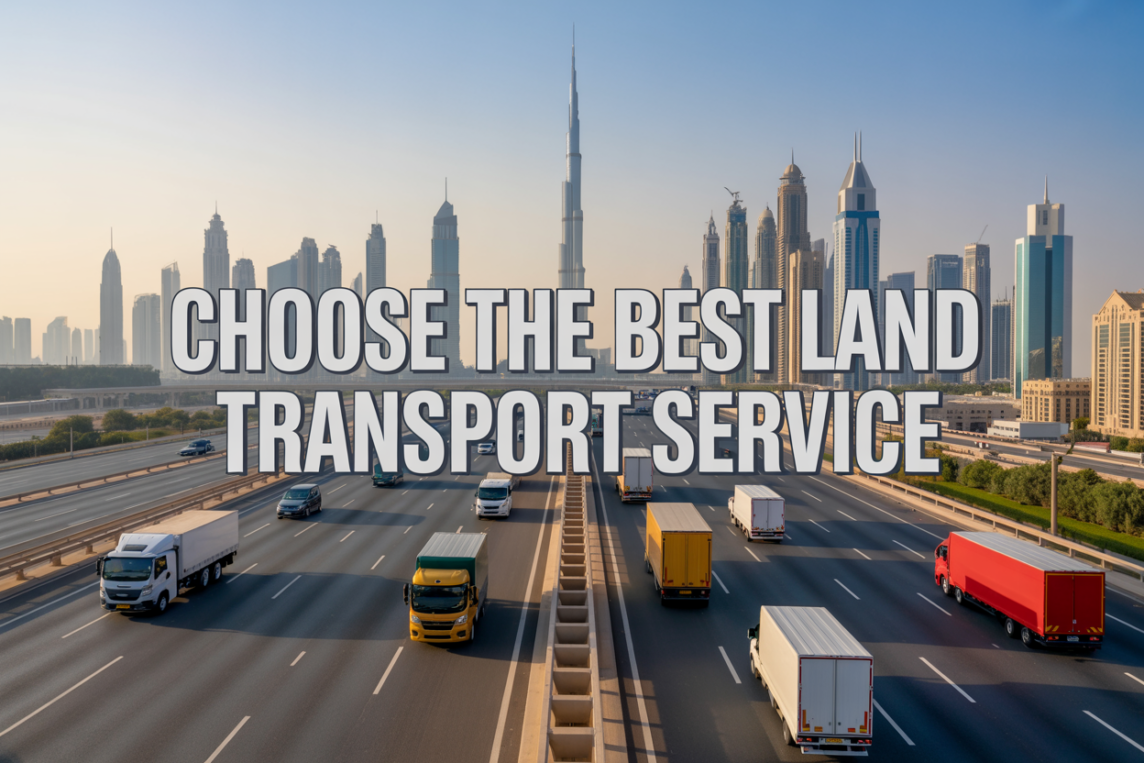
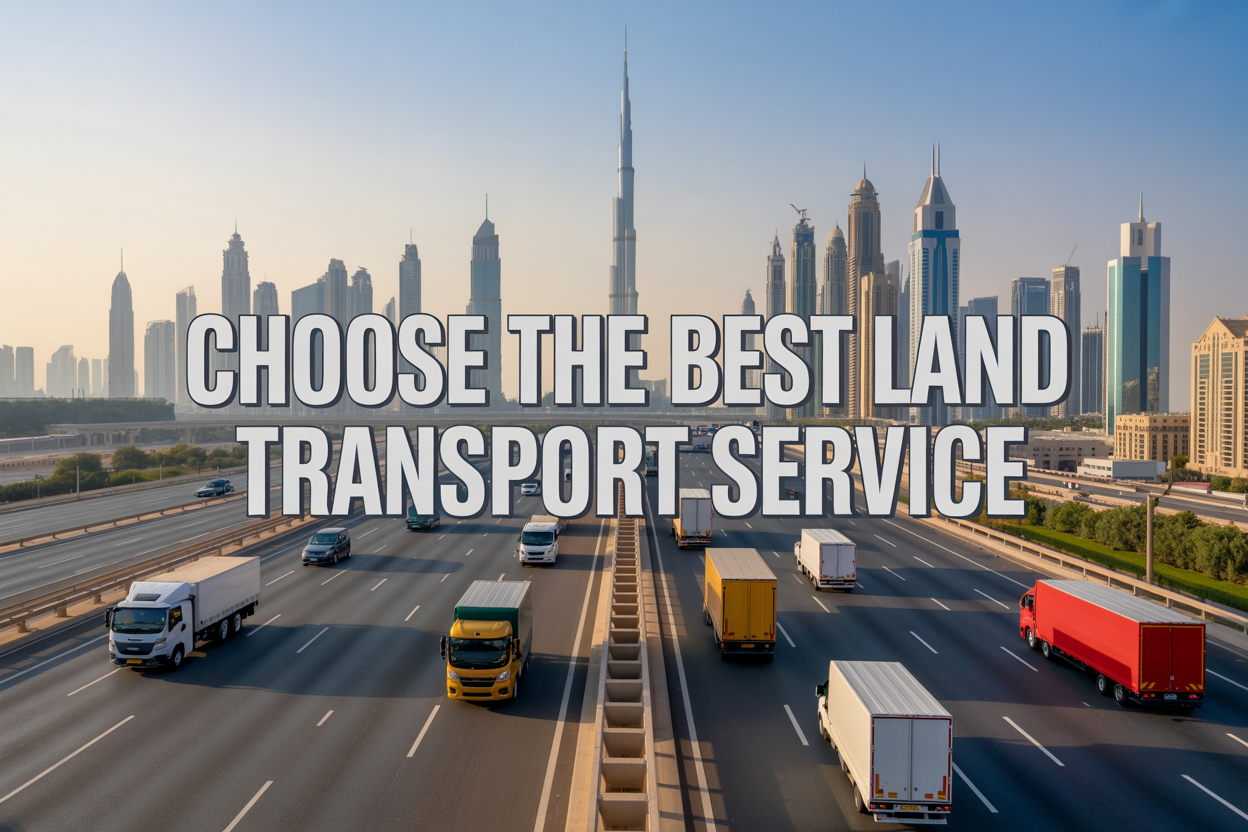
    How to Choose the Best Land Transport Service in UAE

    Finding reliable land transport services in UAE can make or break your business operations, whether you’re shipping cargo across Emirates or need regular freight deliveries in Dubai. This guide helps business owners, logistics managers, and companies of all sizes choose the right transport partner from the hundreds of UAE logistics providers available.

    We’ll walk you through the essential steps to identify your specific transport needs and research licensed providers who meet UAE standards. You’ll also learn how to evaluate service quality, compare pricing effectively, and verify that potential transport companies have the technology and reputation needed to handle your cargo safely and on time.

    Understand Your Transport Requirements

    Assess Cargo Type and Volume Needs

    Different goods require specific handling expertise and vehicle types when selecting land transport services UAE. Temperature-sensitive products need refrigerated trucks, while heavy machinery demands flatbed trailers with specialized loading equipment. UAE logistics providers offer various vehicle sizes, from small vans for documents to full truckloads for bulk shipments. Your cargo’s weight, dimensions, and fragility directly impact which transport companies UAE can accommodate your needs effectively.

    Determine Delivery Timeline Expectations

    Time-critical shipments require reliable transport UAE companies with express delivery capabilities and flexible scheduling options. Standard deliveries typically take 1-3 days within the Emirates, while urgent consignments can be completed same-day or overnight. Freight transport UAE providers offer different service levels – economy options for cost savings versus premium services for guaranteed delivery windows. Peak seasons and weather conditions may affect transit times, so factor in buffer periods for important deadlines.

    Identify Special Handling Requirements

    Certain cargo types demand specialized certifications and handling protocols from UAE shipping companies. Hazardous materials require ADR-certified drivers and compliant vehicles, while pharmaceuticals need GDP validation. High-value items benefit from GPS tracking, secure storage facilities, and insurance coverage. Cargo services Dubai often provide additional services like white-glove delivery, installation support, or customs clearance assistance for international shipments crossing UAE borders.

    Calculate Budget Constraints

    Transport costs vary significantly based on distance, service level, and cargo specifications when choosing commercial transport services. Basic rates typically include fuel surcharges, while premium services add tracking, insurance, and dedicated customer support. Logistics companies Emirates often offer volume discounts for regular shippers or consolidated pricing for multiple deliveries. Compare total landed costs including any additional fees, surcharges, or value-added services to determine the most cost-effective transport service selection UAE option.

    Research Licensed Transport Providers

    Verify RTA registration and permits

    Check that your transport company holds valid Roads and Transport Authority (RTA) registration and all necessary operating permits. Licensed UAE logistics providers must display their RTA credentials prominently, and you can verify these directly through official RTA channels. This verification protects you from working with unauthorized operators who might compromise your cargo safety.

    Check insurance coverage and liability protection

    Reputable transport companies UAE carry comprehensive insurance covering cargo damage, theft, and third-party liability. Request proof of current insurance certificates and understand coverage limits before signing contracts. Many freight transport UAE providers offer additional protection options, so discuss these during your evaluation process.

    Review safety compliance records

    Examine the company’s safety track record, including vehicle maintenance schedules, driver training programs, and accident history. The best transport companies UAE maintain transparent safety records and follow strict compliance protocols. Ask about their safety certifications, regular vehicle inspections, and driver qualification standards to ensure your goods receive professional handling throughout transit.

    Evaluate Service Quality and Reliability

    Evaluate land freight Service Quality and Reliability

    Examine on-time delivery track record

    When choosing land transport services UAE, dig into each provider’s delivery performance metrics. Request detailed statistics about their on-time delivery rates over the past year, including peak seasons and challenging weather conditions. Reliable transport service in UAE companies should maintain delivery accuracy above 95% and provide transparent reporting about any delays or service disruptions.

    Assess customer service responsiveness

    Customer support quality separates exceptional UAE logistics providers from average ones. Test their response times by calling during different hours and asking specific questions about their services. Top freight transport UAE companies offer 24/7 support with multilingual staff who can handle urgent inquiries and provide real-time updates about your shipments.

    Review damage and loss prevention measures

    Investigate how transport companies UAE protect your cargo during transit. Look for providers with comprehensive insurance coverage, secure loading procedures, and proper handling protocols for different types of goods. Ask about their damage rates and compensation policies to understand how they handle potential losses.

    Analyze real-time tracking capabilities

    Modern cargo services Dubai should offer advanced tracking systems that provide live updates about your shipment’s location and status. Verify that their tracking platform is user-friendly and accessible through mobile apps or web portals, giving you complete visibility throughout the transportation process.

    Check warehouse and storage facilities

    Visit potential providers’ warehouses to assess their storage capabilities and security measures. Professional UAE shipping companies maintain clean, organized facilities with proper climate control, security systems, and inventory management processes that protect your goods while in storage.

    Compare Pricing and Value Proposition

    land transport price evaluation dubai

    Request detailed quotes from multiple providers

    Getting quotes from at least 3-5 transport companies UAE gives you real pricing leverage. Smart businesses always compare detailed breakdowns that include fuel surcharges, loading fees, and route-specific costs. UAE logistics providers often have different pricing structures, so getting multiple quotes helps you spot the best deals and avoid overpriced services.

    Understand hidden fees and additional charges

    Watch out for sneaky costs that freight transport UAE companies sometimes tack on later. Common extras include waiting time charges, weekend delivery fees, insurance premiums, and fuel adjustments. Cargo services Dubai providers should give you transparent pricing upfront – any reputable company won’t spring surprise charges on you after the job’s done.

    Evaluate cost per kilometer rates

    Breaking down pricing by distance helps you compare apples to apples between reliable transport UAE providers. Some companies offer flat rates while others charge per kilometer – neither is automatically better. Calculate total costs for your typical routes and see which pricing model works best for your shipping patterns.

    Consider long-term contract benefits

    Commercial transport services often reward loyal customers with significant discounts on annual contracts. These deals typically include priority scheduling, dedicated account managers, and locked-in rates that protect you from market fluctuations. UAE shipping companies compete hard for long-term partnerships, so don’t be shy about negotiating better terms for volume commitments.

    Verify Technology and Communication Systems

    Test GPS tracking and monitoring tools

    Modern transport companies UAE use GPS systems that show your cargo’s exact location in real time. Ask potential providers to demonstrate their tracking platform during your evaluation process. The best UAE logistics providers offer live updates, route optimization alerts, and delivery confirmations through their monitoring systems. Quality GPS tools should provide accurate positioning data, estimated arrival times, and instant notifications if delays occur.

    Assess digital documentation processes

    Reliable transport UAE companies have moved beyond paper-based systems to digital documentation workflows. Check if providers offer electronic proof of delivery, digital invoicing, and automated compliance reporting. Commercial transport services with strong digital processes reduce paperwork errors and speed up transactions. Look for companies that can generate shipping documents, customs forms, and delivery receipts electronically while maintaining secure data storage protocols.

    Review mobile app functionality

    Top logistics companies Emirates provide mobile applications that give customers direct access to shipment information. Test their apps for user-friendly interfaces, push notifications, and offline capabilities. Freight transport UAE providers with quality mobile platforms allow you to track shipments, communicate with drivers, and manage bookings from your smartphone. The app should integrate seamlessly with their main systems and provide consistent updates across all devices.

    Check References and Industry Reputation

    Contact previous clients for testimonials

    Reaching out to past customers gives you authentic insights into a transport company’s performance. Ask about delivery times, cargo handling, and overall satisfaction levels. Most reputable UAE logistics providers willingly share client references when requested. These firsthand accounts reveal how companies handle challenges and maintain service standards.

    Research online reviews and ratings

    Online platforms provide valuable feedback from actual customers using land transport services UAE companies offer. Check Google Reviews, industry forums, and business directories for consistent patterns in customer experiences. Pay attention to responses from transport companies Dubai-based firms provide to negative reviews, as this shows their commitment to customer service and problem resolution.

    Verify industry certifications and awards

    Quality certifications demonstrate a company’s commitment to professional standards. Look for ISO certifications, safety awards, and recognition from UAE transport authorities. Best transport companies UAE markets feature often hold multiple certifications that validate their operational excellence. These credentials indicate compliance with international logistics standards and local regulations.

    Assess years of operation in UAE market

    Conclusion

    Experience in the Emirates market matters significantly when selecting reliable transport UAE services. Companies with extensive local operations understand regional challenges, customs procedures, and route optimization. Established UAE shipping companies have proven track records navigating the country’s logistics landscape. Their longevity often reflects consistent service quality and customer retention rates.

    Finding the best land transport service in UAE comes down to doing your homework and knowing what you need. Start by getting clear on your specific requirements, then dig into researching licensed providers who have solid track records. Don’t just look at the cheapest option – focus on companies that offer reliable service, good communication systems, and have earned positive feedback from other customers.

    The transport industry in UAE is competitive, which works in your favor as a customer. Take time to compare different providers based on their service quality, pricing structure, and technology capabilities. Check their references, read reviews, and make sure they have the proper licensing to operate. When you put in this effort upfront, you’ll save yourself headaches down the road and build a partnership with a transport company that truly supports your business goals.

    READ MORE

    The Ultimate 2026 Guide to Car Customs Clearance in Dubai

    Dubai remains one of the world’s most exciting hubs for car enthusiasts — from classic imports to ultra-luxury exotics. But before you hit the roads in your dream ride, there’s an essential process every owner must navigate: customs clearance. In 2026, customs procedures and tax rules are clearer and more digital than ever, but preparation is still key to avoiding delays and extra charges.

    Why Customs Clearance Matters

    Whether you’re relocating, buying a car abroad, or importing for business, customs clearance is the first official step a vehicle takes to enter UAE territory. Dubai Customs ensures vehicles comply with UAE laws, pays appropriate taxes, and are eligible for registration with the Roads and Transport Authority (RTA).

    What You’ll Pay: Duties & Taxes

    When your car arrives in Dubai, customs levies are straightforward:

    • 5% Customs Duty based on the car’s CIF value — which is the cost, insurance and freight combined.

    • 5% Value-Added Tax (VAT) applied on the total amount after customs duty.

    Put together, that means roughly 10% of the CIF value gets paid before the car is released from the port.

    In 2026, the UAE’s VAT system continues under updated rules that simplify compliance, but the VAT due on imports remains a standard step in clearance

    Core Customs Clearance Documents

    To get your car through Dubai Customs, you’ll typically need:

    • Copy of your passport or Emirates ID

    • Residency visa (if applicable)

    • Original purchase invoice that shows the car’s value

    • Bill of lading from the shipping company

    • Packing list/vehicle details

    • Export documents from the country of origin

    If you’re importing the car yourself, you may only need a passport and invoice — but shipping companies usually require the full suite to avoid hold-ups.

    How Customs Determines Value

    Dubai Customs doesn’t just take the invoice at face value. Officials use the CIF method — assessing the vehicle’s purchase price plus insurance and freight — and may cross-check with market databases to avoid undervaluation.

    This value determines exactly how much duty and VAT you pay. Underdeclaring can delay release, generate fines, or even lead to confiscation.

    Vehicle Rules & Eligibility (2026)

    Here are some important regulatory points to keep in mind:

    • Age limits
      Most imported vehicles should be under a certain age (often under 10 years), unless special approvals are granted.
    • GCC specs compliance
      Vehicles must meet Gulf Cooperation Council (GCC) standards for safety, emissions, air conditioning, etc.
    • Condition restrictions
      Cars classified as salvage, flood damaged, or without insurance cannot be imported.

    Step-by-Step: From Port to Plates

    Here’s the usual way customs clearance works:

    1. Arrival at port — either Jebel Ali or another UAE port.

    2. Submit customs declaration with supporting paperwork.

    3. Customs duty & VAT paid and cleared.

    4. Vehicle inspection may be required.

    5. Customs clearance certificate issued.

    6. Proceed to RTA inspection, insurance & registration to get plates.

    The entire process is increasingly digital through Dubai Customs’ online systems, which helps reduce processing time and paperwork.

    Tips to Smooth Your Clearance

    Use a clearing agent – licensed customs brokers speed up formalities and help avoid mistakes.
    Ensure accurate documentation – mismatches between invoices, names, or vehicle details cause delays.
    Prepare for inspection – ship cars with proper shipping tags and complete details to avoid extra inspections or storage fees.
    Plan your budget upfront – duty + VAT is only part of the cost; add port handling, inspection, and registration fees.

    Conclusion

    Importing a car into Dubai in 2026 remains a well-structured but exacting process. The combination of customs duty, VAT, strict documentation standards, and safety compliance means planning ahead is crucial. But for many car owners — whether collectors, expats, or enthusiasts — successful clearance leads to the reward of driving a unique vehicle on the roads of an automotive paradise.

    At Reef Shipping Services LLC, we make the process of importing and clearing vehicles in Dubai fast, safe, and hassle-free.
    Whether you’re bringing in a car for personal use or commercial purposes, our experts will handle everything from port arrival to final delivery.

    READ MORE

    How to Ship a Boat or Yacht to/from Dubai, UAE

    Dubai, UAE, is one of the most important maritime hubs in the world, making it a preferred location for boat and marine yacht shipping. Whether you own a small recreational boat or a luxury mega yacht, transporting marine vessels requires expertise, proper equipment, and strict safety standards. At Reef Shipping, we specialize in the safe and efficient shipping of boats and marine yachts to and from Dubai, serving destinations across the Gulf region and international ports worldwide.

    Importance of Professional Boat and Yacht Shipping in the UAE

    Boats and marine yachts play a vital role in the UAE’s lifestyle, tourism, fishing, and luxury sectors. Due to their size, value, and technical requirements, marine vessels cannot be transported like standard cargo. Professional shipping ensures that boats and yachts are handled carefully, comply with regulations, and reach their destination without damage or delays.

    Types of Boats We Handle

    Wooden Diving Boats

    Wooden diving boats are designed for long and challenging sea journeys. They can carry large quantities and heavy weights, making them suitable for commercial and diving purposes. These boats require special handling during transportation, as improper balance or support can lead to instability, especially in rough sea conditions.

    Wooden Boats Without Plunge

    These boats are among the most difficult to maneuver due to the absence of plunges. Many of them rely on manual rowing, while some use low-powered motors not exceeding 8 horsepower. Balance is more important than speed for these vessels, which makes careful loading and secure fastening essential during shipping.

    Amateur Boats

    Amateur boats are commonly used by enthusiasts for leisure activities such as fishing near the shore. These boats are typically used within 2 kilometers from the beach or at depths of up to 8 meters. They include inflatable boats, fiber rubber boats with motors, and standard fiber boats. Despite their smaller size, proper transport methods are required to prevent damage.

    Types of Marine Yachts We Ship

    Weekender Yachts

    Weekender yachts are compact and ideal for short trips lasting a few days. They usually accommodate 5 to 6 people and are perfect for weekend getaways. These yachts are often shipped between marinas or to nearby Gulf destinations.

    Cruiser Yachts

    Cruiser yachts are known for comfort and versatility. They typically feature three bedrooms, a salon, and spaces for water activities. These yachts require professional transport planning due to their size and onboard facilities.

    Luxury Yachts

    Luxury yachts offer premium comfort and can accommodate over 30 people. They include air-conditioned cabins, luxury salons, and modern bathrooms, making them suitable for long sea stays. Transporting luxury yachts requires advanced equipment and experienced handling to maintain their pristine condition.

    Mega Yachts

    Mega yachts are the largest marine vessels, often exceeding 50-person capacity. These yachts are designed for long voyages, large events, and private parties. Features such as swimming pools and expansive decks make them highly valuable assets that demand the highest safety standards during shipping.

    Mechanism of Shipping Boats and Yachts from Dubai

    At Reef Shipping, we provide boat and yacht transportation from Dubai and across the UAE to all Gulf and Middle East regions through specialized land and sea freight solutions.

    Transportation Methods

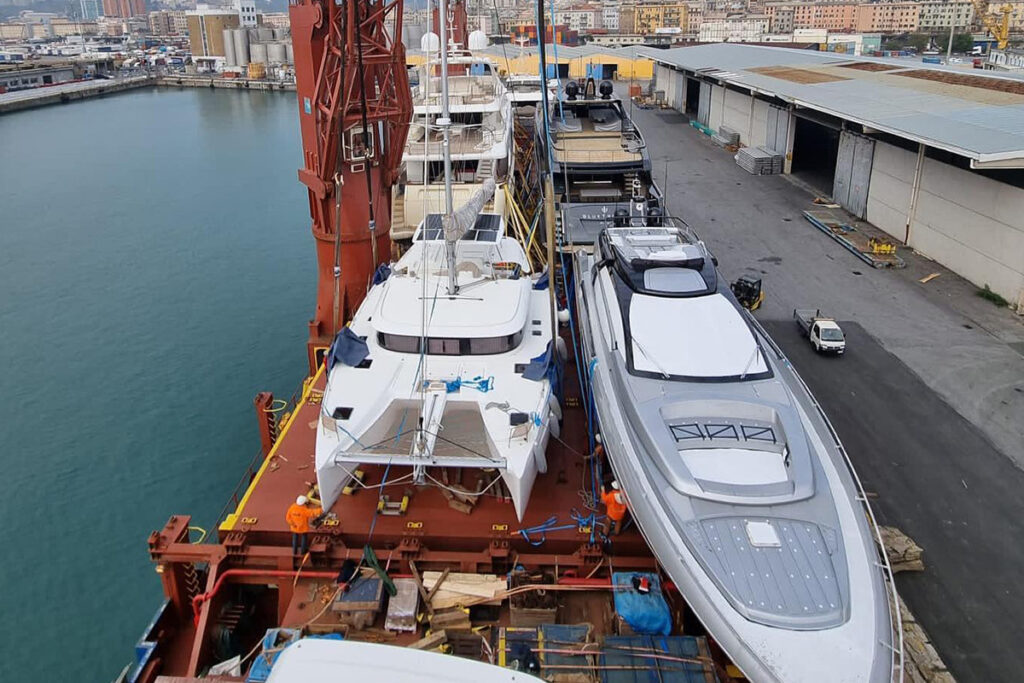
    • Giant yachts and ships: Transported using heavy-duty cranes and lowbed trucks designed for vessels over 20 meters in length.
    • Medium-sized yachts: Moved using long lowbed trailers with widths of 10 meters or more.
    • Small yachts and boats: Transported with short lowbed trucks suitable for compact marine vessels.

    Loading and Handling

    Boats and yachts are lifted using modern cranes operated by trained professionals. This ensures safe loading without scratches, structural stress, or damage to sensitive components.

    Insurance and Safety During Shipping

    Reef Shipping arranges comprehensive insurance coverage for boats and yachts during transportation. Our safety measures include:

    • Route inspection and planning by experienced professionals
    • Escort and supervision during transportation on international roads
    • Full documentation and insurance processing
    • Secure fastening, tightening, and stabilization to ensure safe arrival

    Why Choose Reef Shipping?

    With years of experience in marine logistics, Reef Shipping understands the complexities involved in boat and yacht transportation. Our team combines technical expertise, advanced equipment, and customer-focused service to ensure smooth, reliable, and secure shipping solutions.

    Conclusion

    Shipping a boat or yacht to or from Dubai, UAE, requires careful planning, specialized transport methods, and professional handling. Whether it’s a small amateur boat or a luxury mega yacht, Reef Shipping ensures safe, insured, and efficient transportation tailored to your vessel’s specific needs. Partnering with an experienced marine shipping company guarantees peace of mind and protects your valuable marine investment throughout the journey.

    READ MORE

    How Can I Ship a Car with My Personal Effects From the UAE?

    Shipping a car from the UAE along with personal belongings is a common requirement for expatriates, families moving to new countries, and individuals purchasing vehicles for international use. A major logistics hub, the UAE provides excellent access to global shipping routes, allowing customers to efficiently transport their vehicles and household goods. However, this process can still be challenging if it is not handled properly. There are restrictions and proper shipping methods, and potential problems, and understanding practical solutions will make the entire journey smooth and hassle-free.

    Why do people ship cars and personal effects together?

    Many customers prefer to ship their vehicles along with personal effects for a variety of reasons. Moving families want to avoid buying new household appliances overseas, while car enthusiasts often take accessories, tools, or parts with their vehicle. Shipping everything together reduces costs and the need for multiple shipments. The UAE’s high-quality vehicles and well-maintained home appliances make it a favorable choice for international travel.

    What Are the Available Shipping Methods?

    When shipping a car with personal effects from the UAE, there are two main methods:

    1. Container Shipping (Most Recommended)

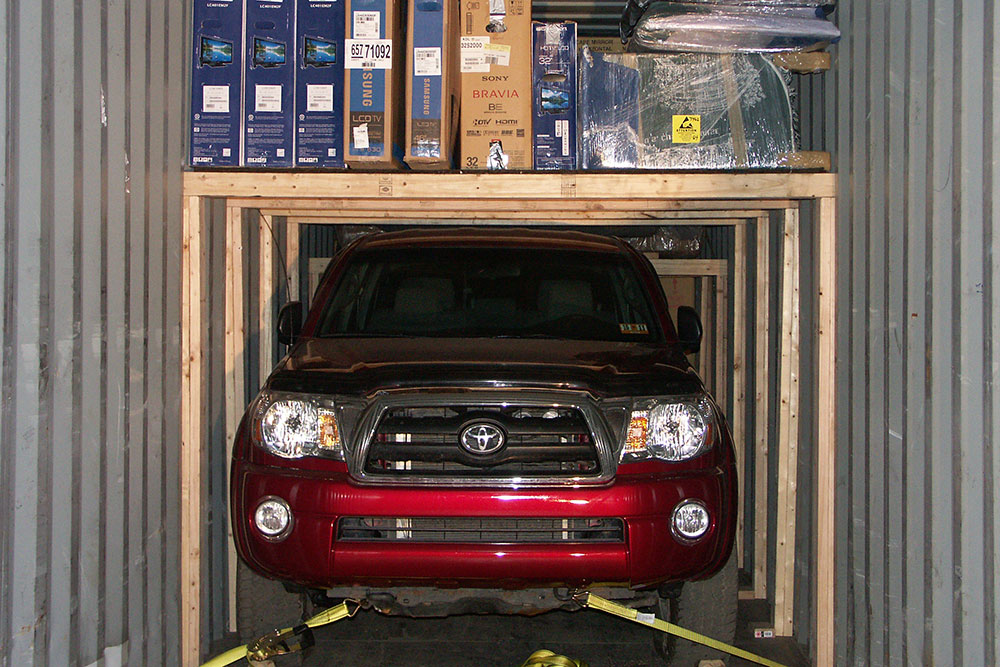
    A 20 feet or 40 feet container allows both the vehicle and personal items to be loaded securely. The car is strapped professionally, and the remaining space is used for boxes, luggage, or furniture. This is the safest and most efficient method.

    1. Ro Ro + Separate Cargo Shipment

    In this method, the car is shipped via RoRo (roll-on/roll-off), and the personal effects are sent separately as cargo. However, this is less convenient because RoRo carriers do not allow personal items inside the vehicle.

    Most customers choose container shipping, as it protects both the vehicle and personal belongings in one controlled environment.

    Step-by-Step Process of Shipping a Car With Personal Effects

    1. Initial Assessments and Quotations

    The shipping company evaluates the type of vehicle, the volume of personal effects, and the destination port. Based on this, they provide options such as dedicated or shared containers.

    1. Vehicle and Goods Inspection

    A pre-shipment inspection ensures the vehicle is in good condition and that all items comply with customs regulations.

    1. Documentation
    • Vehicle registration card
    • Passport and Emirates ID
    • Export certificate
    • Packing list of personal effects
    • Authorization letter (if needed)
    1. Packing and Loading

    The vehicle is driven into the container and fixed using belts and wheel locks. Personal belongings are packed, labeled, and arranged safely around the vehicle.

    1. Customs Clearance in the UAE

    The RTA issues the export certificate, and UAE customs inspects the container before sealing it.

    1. Shipping and Tracking

    Once on board, customers can track their shipment through the logistics provider’s system.

    1. Arrival, Unloading, and Customs Clearance

    Upon reaching the destination, the container is opened, goods are inspected, duties are calculated, and the car is registered according to the country’s regulations.

    Common Problems When Shipping a Car With Personal Effects and Their Solutions

    Shipping personal items is convenient, but there are some major problems with it and their solutions:

    Customs Restrictions on Personal Items

    Many countries have strict rules about what can be put inside a vehicle when imported. Certain items such as electronics, liquids, food, or valuables may be prohibited. Customs inspections can be complicated if these items are found in the container.

    Solution:

    Create a detailed packing list and avoid restricted items. Work closely with your shipping company to check the destination country’s regulations before packing. Professional movers ensure that only such items are loaded, reducing the risk of delays or fines.

    Risk of Damage During Loading and Transit

    When placing multiple items on the side of a vehicle, there is a risk of scratches, dents, or movement during transportation if the items are not secured correctly. This unprofessional packing increases the risk.

    Solution:

    Use proper packing material, padding, and secure strapping. A professional logistics provider uses wooden frames, cushioning, and container braces to protect the car and personal belongings. Container loading should always be handled by trained personnel.

    Delayed Documentation and Export Clearance

    A frequent issue is last-minute delays caused by incomplete or incorrect documents. Missing export certificates, incorrect vehicle details, or mismatched packing lists can hold up the shipment at the port.

    Solution:

    Prepare all necessary documents in advance. Accurate information should be shared, and copies should be prepared and kept. Shipping companies with export clearance support help prepare paperwork properly and ensure smooth processing.

    Unexpected Customs Duties at the Destination

    When the vehicle reaches its destination, customs officials assess the value of the car and personal belongings. Sometimes the import duty is higher than expected.

    Solution:

    Ask for an advance duty estimate before shipping. A reliable logistics company provides a clear explanation of expected charges and advises on how to reduce costs legally, such as using shipping or tax deductions as part of a personal move.

    Port Congestion and Transit Delays

    Congested ports or unforeseen circumstances such as weather may delay container offloading and customs inspections. This will increase the expected arrival time.

    Solution:

    Choose flexible schedules and track your shipment regularly. Professional shippers provide real-time updates and take initiative to reduce waiting time.

    The Important Role of Reef Shipping in the Process

    Reef Shipping plays an important role in helping customers safely ship their vehicles and personal items from the UAE to any global destination. With years of experience in container loading, customs documentation, and international logistics, Reef Shipping ensures that every shipment is handled with precision. Paperwork, packaging, and export procedures are carried out accurately. It also reduces stress and prevents errors that commonly occur in cross-border shipments.

    Ensures safe loading and accurate documentation when handling personal effects with a vehicle.

    Reef Shipping company Dubai collaborates with trusted global partners to ensure timely delivery and smooth customs handling at the destination port.

    Why You Should Always Use a Professional Shipping Company

    • Shipping a car with personal effects is no easy feat. It requires careful planning, customs knowledge, technical packing skills, and international shipping experience. These are ensured by working with a professional logistics provider.
    • Safe loading and protection of items
    • Accurate and timely documentation
    • Exemption from customs penalties
    • Timely delivery
    • Comprehensive guidance through each step
    • Transparent cost structure and consistent communication
    • It reduces stress for families and individuals relocating abroad and ensures safe delivery of their vehicle and belongings.

    This reduces the stress for families and individuals relocating abroad and ensures their vehicle and belongings arrive safely.

    Conclusion

    Shipping your car with personal belongings from the UAE is certainly possible if you understand the shipping procedures, customs rules, and packing requirements. Although the process may seem complicated, proper preparation and support make it manageable. With challenges such as customs regulations, documentation issues, and potential damages, choosing a reliable logistics partner is crucial. Companies like Reef Shipping offer the specialized knowledge and practical assistance needed to ensure your car and personal belongings are moved securely and efficiently.

    READ MORE

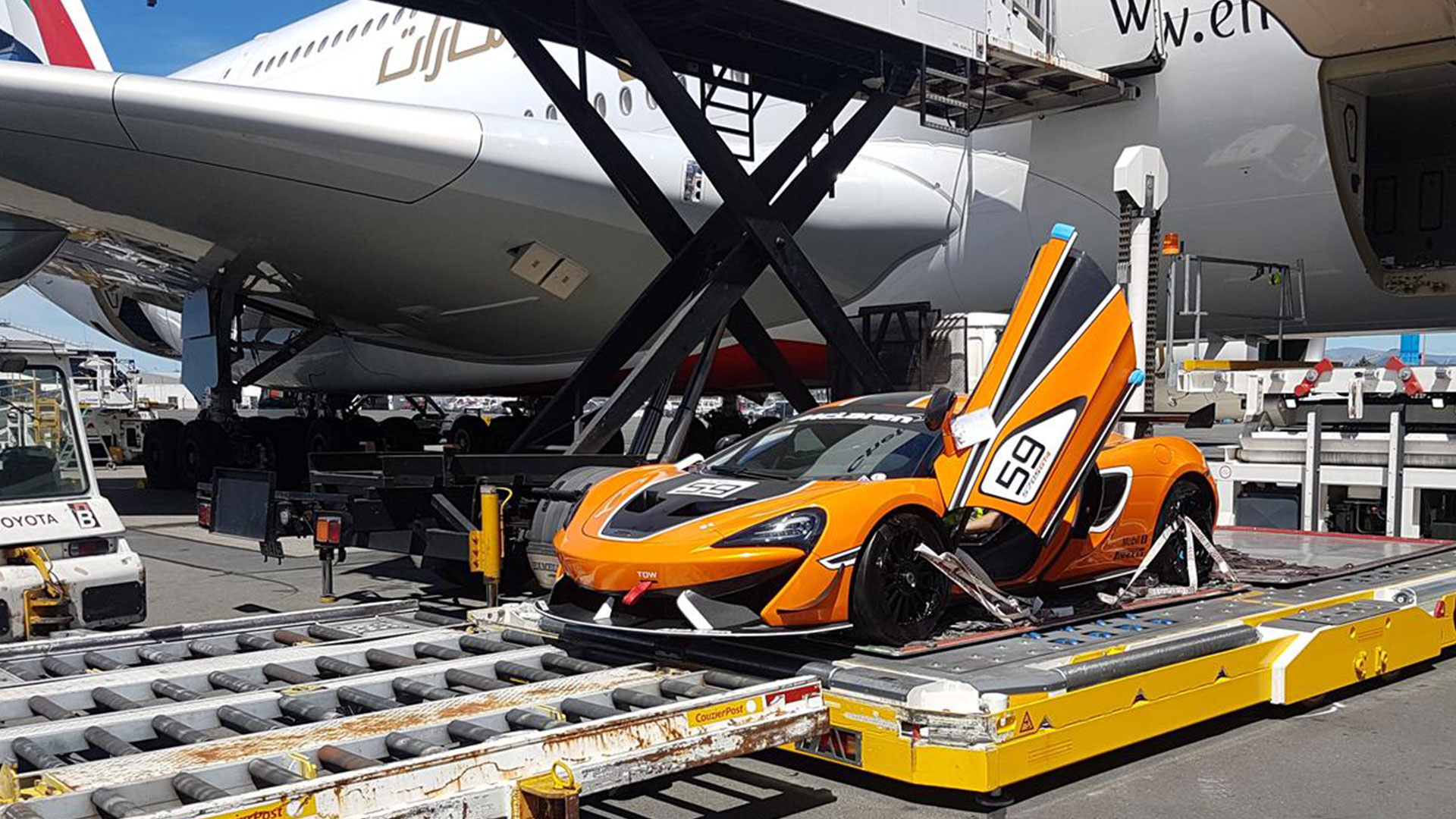
    How to Ship a Car Internationally by Air Freight?

    How to Ship a Car Internationally by Air Freight?

    Shipping a car internationally via air freight is the fastest and safest way to transport high-value, luxury vehicles. While this service offers incredible speed and protection, many users feel overwhelmed by paperwork, airline restrictions, customs rules, and price fluctuations. As a trusted global logistics provider, Reef Shipping specializes in seamless international air freight car transportation, helping you enjoy a smooth and stress-free experience. This guide explains how the air freight process works, what customers typically encounter, and how Reef Shipping ensures hassle-free vehicle delivery worldwide.

    What makes air freight the best option for car shipping?

    Air freight is ideal for customers who need fast and safe transportation. Unlike sea freight, which can take weeks, air freight delivers your car within 1–5 days. This makes it a preferred choice for time-sensitive needs such as motorsport events, exhibitions, business travel, and luxury vehicle relocations. Reasons why clients choose Reef Shipping:

    . Fast global delivery

    . Premium security and airline-approved handling

    . Minimum human contact and low risk of damage

    . Accurate arrival schedules

    . Best option for high-value vehicles

    Many users who require reliability and security describe air freight as a premium but valuable service.

    Choosing Reef Shipping as Your Air Freight Partner

    The first and most important step in shipping a car internationally via air freight is choosing a reliable logistics partner. Reef Shipping offers specialized vehicle transportation solutions that handle everything from paperwork and inspection to airline coordination and customs clearance.

    Many customers feel uncertain when starting the process due to complex international regulations, but a professional team makes everything simple and stress-free.

    Reef Shipping ensures:

    • Accurate quotes
    • Smooth documentation handling
    • Safe vehicle preparation
    • Airport-to-Airport or Door-to-Door Services
    • Airline-Approved Palletizing and Crating
    • Worldwide Customs Support

    With Reef Shipping, clients can rest easy knowing that their vehicle is being handled by experts who understand every detail of global car logistics.

    Understanding the Cost of Air Freight Car Shipping

    Air freight rates vary. It can be confusing at first. Instead of a fixed price, costs depend on vehicle size, weight, airline cargo availability, and airport fees. Reef Shipping provides transparent quotes with clear cost breakdowns; customers know exactly what they are paying for.

    Costs depend on:

    • Vehicle dimensions (L × W × H)
    • Gross vehicle weight
    • Crating or pallet charges
    • Fuel surcharges
    • Airline Security Fees
    • Handling Fees at Origin and Destination
    • Import and Export Customs Requirements

    Customers also appreciate that Reef Shipping helps them avoid unexpected fees that often occur when dealing with customs or a terminal.

    Preparing Required Vehicle Documentation

    Documentation is one of the biggest challenges for customers shipping a car internationally. Incorrect documents can cause delays in customs clearance. Reef Shipping guides each customer through the documentation process to ensure everything is ready before the shipment begins.

    Required documents typically include:

    • A copy of the vehicle owner’s passport
    • Vehicle title / RC book
    • Purchase invoice (for valuation)
    • Proof of ownership
    • Export permission (if required by country)
    • Insurance documents

    Many first-time users say they feel overwhelmed by paperwork, but Reef Shipping simplifies the process by verifying, preparing, and submitting all documents correctly to avoid delays.

    Preparing the Vehicle for Air Freight

    Before your vehicle enters the airport cargo terminal, it must meet airline safety rules. Reef Shipping provides clear instructions so customers can prepare their cars properly.

    The essential preparation steps are as follows:

    • Reducing fuel to 1/4 tank or less
    • Disconnecting the battery (for specific destinations)
    • Taking out all personal items from the car
    • Thoroughly cleaning the vehicle before inspection
    • Deactivating the alarm system

    Since many countries don’t allow personal items inside vehicles, Reef Shipping guides customers clearly on these rules to avoid customs delays or issues.

    Delivering the Car to the Airport Terminal

    Once the car is ready, it is transported to the airport cargo terminal. Customers can drive the vehicle themselves or use Reef Shipping’s door-pickup service. Upon arrival, the vehicle is inspected, measured, and photographed as part of airline compliance procedures.

    Users often feel anxious since they cannot accompany the car inside restricted cargo zones. However, Reef Shipping works closely with airline cargo teams to ensure the highest standards of safety and handling throughout the process.

    Palletizing and Securing Your Vehicle

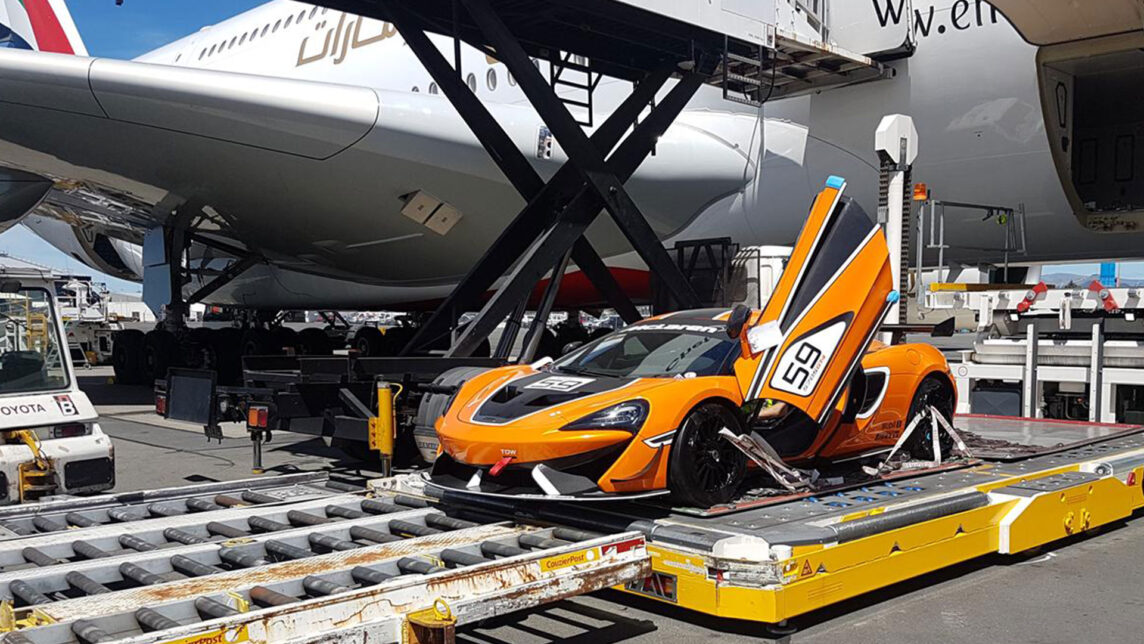
    Your car is securely strapped to an aircraft pallet or placed inside a protective custom wooden crate. This step ensures the vehicle remains completely stable and protected during loading, flight, and unloading.

    Benefits of Reef Shipping’s secure palletizing:

    • Zero movement during flight
    • Maximum safety from scratches or impacts
    • Fully protected from outside exposure
    • Professional airline-approved securing
    • Safe handling with advanced cargo equipment

    This stage gives customers confidence that their luxury, sports, classic, or electric vehicles are protected at every step.

    Loading the Vehicle into the Aircraft

    The secured vehicle is then loaded into an international cargo aircraft like a Boeing 777F, 747F, or Airbus A330F. Only trained cargo professionals handle this step. Although users cannot witness the loading due to airport restrictions, Reef Shipping provides updates and tracking for complete peace of mind.

    Most vehicles arrive at their destination within 1–5 days, depending on the route and airline schedule.

    Import Customs Clearance at Destination

    Upon arrival, the vehicle undergoes import customs clearance. This is often the most stressful part for customers due to varying country regulations.

    Customs officers verify:

    • Ownership documents
    • Export certificates
    • Vehicle condition
    • Tax and duty calculations

    Many users face delays because of missing documents or unexpected import fees. Reef Shipping offers full customs support, ensuring fast clearance and smooth delivery.

    Final Delivery of Your Vehicle

    Once customs is complete, customers can pick up their cars from the airport or choose Reef Shipping’s door-to-door delivery service. Most clients receive their vehicles in the exact same condition as when they handed them over—clean, protected, and ready to drive.

    Common User Challenges & How Reef Shipping Solves Them

    Users often face the following problems when shipping cars by air:

    • Rising and inconsistent pricing
    • Complicated documentation
    • Airline-specific restrictions
    • Import and export customs delays
    • Miscommunication with agents
    • Personal items causing customs issues

    Reef Shipping eliminates these problems through professional guidance, transparent communication, secure handling, and full customs support.

    Conclusion

    Shipping a car internationally by air freight offers unmatched speed, safety, and precision. With the right logistics partner, the process becomes simple and stress-free. Reef Shipping Dubai ensures your vehicle is transported with the highest level of care—from documentation and inspection to airline coordination and customs clearance. Whether you are shipping a luxury car, sports car, classic model, or electric vehicle, Reef Shipping provides a fast, secure, and premium air freight solution to any global destination.

    READ MORE

    How to export cars from UAE to GCC countries rules and Process 2025?

    Exporting a car from the UAE to GCC countries in 2025 is easier and more reliable than ever before. With world-class infrastructure, simplified customs procedures, and trusted logistics providers like Reef Shipping, thousands of car dealers, expats, and businesses choose Dubai as their preferred export hub every year.

    Whether you’re shipping your car to Saudi Arabia, Oman, Qatar, Bahrain, or Kuwait, this updated 2025 guide explains everything you need to know—from export rules and required documents to step-by-step procedures and expert tips for a smooth, compliant shipping process.

    Why Export Cars from UAE to GCC Countries?

    The UAE is the leading car export hub in the Middle East, thanks to its advanced port facilities, tax-free car sales, and global vehicle inventory. Buyers and dealers from across the Gulf prefer purchasing cars from Dubai and Abu Dhabi because they get premium-quality vehicles at competitive prices.

    Top Advantages of Car Export from the UAE

    • Huge Vehicle Selection—From brand-new SUVs and sedans to luxury and electric vehicles.
    • Lower Prices – The UAE offers tax-free car purchases and cost-effective export deals.
    • Reliable Logistics—Trusted companies like Reef Shipping provide safe, insured, and timely deliveries.
    • Streamlined Documentation – Simplified UAE customs and RTA export systems ensure quick processing.

    For GCC buyers and importers, the UAE continues to be the most convenient and affordable vehicle source in the region.

    Essential Documents for Car Export from the UAE

    To ensure smooth customs clearance, prepare all necessary paperwork before beginning the export process.

    Documents Required:

    • Original Vehicle Registration (Mulkiya)
    • Export Certificate from RTA or relevant authority
    • Passport/Emirates ID of the vehicle owner
    • Vehicle Inspection/Passing Certificate
    • Bill of Lading (for sea shipping)
    • Commercial Invoice or Sale Agreement
    • Certificate of Origin (if required)
    • Insurance papers and export number plates

    Keeping these documents ready helps you avoid customs delays and extra costs.

    Step-by-Step Car Export Process from UAE to GCC Countries

    1. Check Import Rules of the Destination Country

    Each GCC country has its own import regulations:

    • Saudi Arabia: Cars must not be older than 5 years; right-hand drive vehicles are banned.
    • Oman & Bahrain: Fewer restrictions and easier import procedures.

    Before exporting, ensure your vehicle meets the age, emission, and safety standards of the destination country.

    1. De-Register and Obtain an Export Certificate

    Visit the RTA (Roads and Transport Authority) or the local traffic department to deregister your car. Once approved, you’ll receive an export certificate and temporary export plates (if you’re driving the car across the border).

    1. Vehicle Inspection and Clearance

    A vehicle passing certificate is required to confirm the car’s condition and VIN/chassis authenticity.
    This inspection is mandatory for all exports leaving the UAE.

    1. Choose the Right Shipping Method

    Depending on your destination, choose one of the following transport methods:

    • Road Transport – Ideal for Oman, Saudi Arabia, or Bahrain.
    • Ro-Ro (Roll-on/Roll-off) Shipping—Best for individual car exports; cost-effective and fast.
    • Container Shipping – Recommended for luxury or multiple vehicles.

    Partnering with Reef Shipping, a trusted car shipping company in Dubai, ensures professional handling, secure loading, and smooth customs clearance at both ends.

    1. Customs Declaration and Freight Booking

    Your logistics partner or freight forwarder will manage:

    • UAE export declaration
    • Customs clearance procedures
    • Freight booking (land or sea)
    • Bill of Lading issuance

    This process guarantees your vehicle is legally and safely shipped from Dubai to your GCC destination.

    1. Pay Customs Duties and VAT

    All GCC countries levy customs duties and VAT on imported cars.

    Typical rates include:

    • Saudi Arabia: 5% customs duty + 15% VAT
    • Oman, Qatar, Bahrain, Kuwait: 5% duty + standard VAT (if applicable)

    Confirm the latest rates with your export agent to avoid unexpected costs.

    1. Vehicle Registration in the Destination Country

    After customs clearance, register your vehicle locally by preparing:

    • Customs Clearance Certificate
    • Import Permit
    • Insurance Policy
    • Technical Inspection Report

    Some countries (e.g., Saudi Arabia) may also require SABER or GSO/SASO certification.

    Country-Specific Export Tips (2025 Update)

    Car Export from UAE to Saudi Arabia

    • Vehicle must meet GSO/SASO standards.
    • Model year not older than 5 years.
    • Right-hand drive vehicles prohibited.

    Car Export from UAE to Oman

    • Smooth overland transport.
    • Requires export certificate, inspection report, and importer’s ID.
    • 5% import duty at Omani customs.

    Car Export from UAE to Qatar, Kuwait & Bahrain

    • A standard 5% import duty applies.
    • VIN/chassis must match UAE export papers.
    • Electric & hybrid cars may qualify for tax exemptions or reduced duties.

    Expert Tips to Avoid Export Delays

    • Always work with a registered UAE car export company like Reef Shipping.
    • Avoid undervaluing your vehicle—customs may reassess market value.
    • Keep both physical and digital copies of all documents.
    • Stay updated on 2025 EV and hybrid car regulations for GCC countries.

    Why Choose Reef Shipping for Car Export from UAE to GCC Countries

    Reef Shipping is a leading Dubai-based car shipping and logistics company, specializing in vehicle exports across the Gulf region.

    We provide:

    • End-to-end documentation & customs clearance
    • Door-to-door car transport across GCC borders
    • Secure Ro-Ro, container, or overland shipping options
    • Competitive, transparent pricing—no hidden charges
    • Comprehensive insurance and real-time tracking

    Whether you’re an individual relocating, a dealer expanding to Gulf markets, or a corporate client managing multiple exports—Reef Shipping ensures a fast, safe, and fully compliant car shipping experience.

    With a strong regional network and expert logistics team, Reef Shipping remains your trusted partner for car export from uae to GCC Countries like Saudi Arabia, Oman, Qatar, Bahrain, and Kuwait.

    READ MORE

    How to import car from Dubai to India for 6 months

    How to import car from Dubai to India for 6 months

    You can drive your UAE-registered dream car in India for up to 6 months

    Most people are able to find and buy their dream cars be it luxury cars or sports cars. The UAE has a lot of options in this regard. From renting to owning, UAE provides affordable loan options. But for car enthusiasts who have their dream car in the UAE and wonder what to do with it in India, it can be quite an adventure.

    At least 125 percent of the value of your car is required to permanently transfer your car to India, and more of that is paid as taxes and other fees in India. This will also include issues of right-hand driving on Indian roads. You will usually pay up to AED 150,000 or more to change the modified side.

    The fees, permit deposits and taxes involved in the process of transporting your car from UAE to India vary depending on the destination.

    First of all you must be a resident of Dubai. Your residence visa and UAE driving license are mandatory documents required for this.

    Shipping a Car from Dubai to India Temporarily: What You Need to Know

    Shipping a car temporarily from Dubai to India is possible, but it involves clear regulations and paperwork. This process is typically done under the Carnet de Passage en Douane (CPD) system — a customs document that allows you to bring a vehicle into India without paying import duties, provided the vehicle leaves the country within a set time frame.

    Key Requirements:

    1. Carnet de Passage: This is essential. It must be obtained in Dubai before shipping and acts as a guarantee that the vehicle will be re-exported. Without it, you may face heavy duties or seizure.

    2. Temporary Import Duration: The car can stay in India for up to 6 months. In some cases, an extension may be granted by the customs authorities.

    3. Ownership & Documents: The car must be registered in your name. You’ll need to provide original registration papers, passport, visa, and proof of temporary stay in India.

    4. Shipping Options: RORO (Roll-on/Roll-off) is the most cost-effective. Container shipping offers added safety but is more expensive.

    5. Port of Entry: Common Indian ports for car imports include Mumbai, Chennai, and Kochi.

    Costs to Consider:

    • Shipping charges (approx. AED 7,000–12,000)

    • Port handling and clearance fees

    • CPD issuance (refundable deposit may be required)

    Passport for car too – Carnet De Passage

     If you intend to ship and use your car in another country, the car needs a ‘passport’, called a CPD. It is internationally valid and legally required in most countries that allow temporary use of foreign-registered vehicles, which are mainly aimed at motor tourists and commuters.

    Road trip

    CPD is taken by travelers driving through locations in various countries where CPD is valid and required. They can exit and enter without major customs hassles. It includes all the details about the vehicle and the permit holder, including the expiry date and the countries visited with the current CPD. CPD ensures that customs officials in the destination country can make on-the-spot cash deposits, fees or other national documents.

    Only after receiving the CPD is a vehicle owner allowed to begin the process that involves moving the vehicle out of the country. CPD can be used to ship your vehicle to the destination or drive it through land borders. CPD is also available from UAE.

    What the application should include import car from Dubai to India 2025:

    • All vehicle details including year of manufacture, model and category of the vehicle
    • Also details like visa and UAE driving license of the owner
    • Details for two references based in UAE and two references at destination.
    • Make sure you have copies of all necessary documents like passport, driving license, car registration etc., which should also be attached with the application.
    • Must have bank check and cash deposit
    • Refundable cash deposit and bank security cheques

    The authority requires a security check and cash deposit – these are refunded when the vehicle is returned to the country. Credit/debit cards cannot be used for all transactions so cash must be brought.

    E amounts vary based on the vehicle’s year of manufacture, country of destination, vehicle model and other factors. You can check the category your vehicle belongs to at the authority’s office.


    For destination countries including India and Pakistan, the following charges apply:

    Year : 1990-2005

    AED 15,000 cash deposit and AED 15,000 security bank check for regular vehicles

    AED 25,000 cash deposit and AED 25,000 security bank check for station wagons

    AED 30,000 cash deposit and AED 30,000 security bank check for luxury vehicles

    Year: 2006 to 2015

    AED 20,000 cash deposit and AED 20,000 security bank check for regular vehicles

    AED 35,000 cash deposit and AED 35,000 security bank check for station wagons

    AED 40,000 cash deposit and AED 40,000 security bank check for luxury vehicles

    Year: 2016 to 2021

    AED 30,000 cash deposit and AED 30,000 security bank check for regular vehicles

    AED 45,000 cash deposit and AED 45,000 security bank check for station wagons

    AED 70,000 cash deposit and AED 70,000 security bank check for luxury vehicles

    Once the vehicle is returned to the UAE within the allotted time and the CPD is submitted, the cash deposit and security check will be fully refunded. These amounts vary based on other countries intended to be visited with the CPD.

    Service charges including deposits are around AED 1,200.

    Once the vehicle owner gets a CPD, everything can be done on the same day if all the documents are in order. In addition, a tourism certificate from the Roads and Transport Authority of the UAE is required. You can also go to any Tasjeel office to get this certificate.

    Import car from Dubai to India – You will need the following documents

    • Original Emirates ID
    • Ownership certificate of the vehicle
    • In case of mortgaged vehicle, electronic no objection certificate from mortgagee
    • NOC of Emirates Motorsports Organization in all cases except for nationals, diplomatic and government corps and GCC nationals wishing to use their vehicles in GCC countries.

    The service fee is based on the weight of your vehicle and starts from AED 100. Penalties, if any, must be cleared before you get the certificate. After submitting all the required documents it will take you just 5 to 10 minutes to get the certificate.

    Once you have all these documents, you are good to go. Next, it is best to proceed with shipping with a company that can deliver your vehicle door-to-door, which will follow the customs procedures and documents in the destination country. Shipping by sea may take 5 to 8 days. This is usually the method that everyone chooses. Shipping costs will depend on the size of the vehicle and the size of the container used to transport the vehicle.

    It is important to ensure that there is nothing extra in the car during shipping. Any extra items left anywhere inside the car will also be considered unaccounted for.

    Door-to-door transport of a vehicle over 20 feet costs an average of Dh6,000 to Dh7,000. This rate is only average for a mid-size vehicle. Single container when shipping to India. Rate may vary based on destination port, company rates, services included, container details etc.

    Reef Shipping Service Overview:

    Reef Shipping Service, based in the UAE, stands as one of the premier car shipping experts in the region. Their wealth of experience, international relations, customs knowledge, and reliable methods position them as a trusted partner for successful international moves to various countries and destinations.

    Specialized Expertise:

    With a focus on international shipping, Reef Shipping leverages its specialized expertise to navigate the complexities of customs, ensuring a smooth and efficient movement of goods across borders.

    Reef Shipping Service emerges as a reliable and efficient partner for individuals and businesses looking to undertake international moves, offering a range of services and expertise to facilitate a successful relocation experience.

    READ MORE

    Top 10 Biggest RORO Ships in 2025?

    Top 10 Biggest RORO Ships in 2025?

    RoRo ships, also called roll-on/roll-off vessels, are special kinds of ships made to carry wheeled goods such as cars, trucks, train carriages, and big machines like cranes. There are two main types of these ships: Pure Car Carriers (PCCs), which only carry cars, and Pure Car and Truck Carriers (PCTCs), which can take both cars and heavy equipment. These ships are essential for global shipping because they allow quick and easy loading and unloading through their built-in ramps. The use of RoRo ships started to grow in the 19th century, mainly because of the Industrial Revolution in Britain and the increasing trade across the world.

    As more people started buying cars and using heavy machinery, ship companies began building bigger ships that could carry large amounts of wheeled items across the sea, changing the way goods were transported by sea. Today, RoRo ships have become enormous and very efficient. They are not only bigger but also use better technology to help protect the environment. They have improved hull shapes, use cleaner fuel and hybrid engines, and produce less pollution. These modern ships are part of the future of green shipping. Now let’s look at the ten largest RoRo ships that are currently in operation around the world.

    1. MV Tønsberg

    The MV Tønsberg, part of Wallenius Wilhelmsen’s MK-V class, is the world’s largest RoRo vessel with a massive 138,000 m³ cargo capacity. Built in 2011 by Mitsubishi Heavy Industries, it measures 265 m long and 32 m wide and offers six decks for cars, heavy machinery, and breakbulk cargo.

    Equipped with powerful ramps—one capable of lifting 450 tonnes—it ensures smooth loading and unloading. With over 50,000 sq. m of deck space and accommodations for 37 crew, this 75,251 GT giant combines size, efficiency, and eco-friendliness by running on low-sulfur fuel and marine diesel.

    1. Figaro Vehicle Carrier

    The Figaro, built in 2011 by Daewoo Shipbuilding & Marine Engineering, is a powerful RoRo carrier operated by Wallenius Wilhelmsen. Classified as a large car truck carrier, it can transport up to 7,880 cars or a mix of cars, buses, and heavy vehicles across nine flexible decks.

    With dimensions of 232 m in length, 32 m in beam, and a gross tonnage of 74,258, this Swedish-flagged vessel is built for both capacity and performance. Its dual ramps and liftable decks allow seamless handling of oversized cargo, while a top speed of 20 knots ensures efficiency at sea.

    Equipped with automated engine controls, optimized rudders, and advanced fire safety systems, Figaro blends technology with safety. Its 39-member crew also benefits from comfortable onboard living spaces, making it a true balance of power, innovation, and crew well-being.

    1. CLdN Group’s MV Celine

    Known as the “Gigantic of the Irish Sea,” the MV Celine is one of the biggest short-sea RoRo ships currently in use. It is owned by a company based in Luxembourg called CLdN and was built at a shipyard in South Korea named Hyundai Mipo. The ship started operating in 2018. The MV Celine has a huge capacity of 8,000 lane meters, which helps move cars and trucks between Ireland, Belgium, and the Netherlands.

    This supports important trade routes in Europe. The ship is 235 meters long, 35 meters wide, and has a gross tonnage of 74,273, making it a standout in the region. The ship has five decks and two big ramps, with three of them specifically for trucks.

    This setup allows for flexible and efficient transport. It uses a modern two-stroke engine that gives good performance while also cutting down on emissions. This makes the MV Celine a great example of combining large size, speed, and environmental responsibility.

    1. Century Highway Green (K-Line)

    The Century Highway Green, launched in 2021 by Kawasaki Kisen Kaisha Ltd. (K-Line), is a groundbreaking step in eco-friendly RoRo shipping. Built at Japan’s Tadotsu Shipyard, it operates on liquefied natural gas (LNG) instead of heavy fuel oil, cutting carbon emissions by 25% and reducing sulphur and nitrogen oxides by up to 85%.

    Measuring 200 m in length and 38 m in width, the vessel can carry 7,080 cars in a single voyage. Its dual-fuel engines and massive 2,440 m³ LNG tank ensure both sustainability and efficiency, while advanced monitoring systems track fuel usage and engine performance in real time.

    Beyond its green technology, Century Highway Green is equipped with cutting-edge digital features, including full Wi-Fi coverage across decks and enhanced surveillance systems, making it one of the most modern and environmentally responsible RoRo carriers in the world.

    1. ARC Endurance

    The ARC Endurance, operated by American Roll-On Roll-Off Carrier (ARC), is the largest RoRo vessel sailing under the U.S. flag. Built in 1996 by Mitsubishi Heavy Industries and previously named Taronga, it has stood the test of time and continues to rank among the biggest RoRo ships in the world. With dimensions of 264.6 m in length and 32.29 m in width and a gross tonnage of 72,708, it offers an enormous 260,000 sq. ft of cargo space spread across nine decks. Its advanced ramps, capable of lifting up to 330 tonnes, allow it to transport a wide variety of cargo, from passenger cars to heavy-duty military equipment.

    Despite its age, the ARC Endurance remains crucial in both commercial and defense logistics. It is frequently deployed to strategic ports across the Mediterranean, Middle East, and South Asia, showcasing its versatility and reliability. Its ability to handle diverse and oversized cargo has cemented its reputation as one of the most valuable assets in the global RoRo fleet.

    1. Eco Livorno (Grimaldi Lines)

    Launched in 2021, the Eco Livorno is part of the GG5G class, recognized as the world’s greenest generation of RoRo ships. Built at the Jinling Shipyard in China for the Grimaldi Group, this Italian-flagged vessel combines size with cutting-edge sustainability. Measuring 238 m in length and 34 m in width, with a gross tonnage of 67,311, it stands out as both massive and efficient.

    The ship offers 7,800 lane meters of cargo space, capable of carrying up to 495 trailers and 182 cars across its seven decks. Its hybrid propulsion system, supported by lithium batteries recharged through onboard solar panels, allows Eco Livorno to achieve zero emissions while at port—a significant step forward in eco-friendly maritime transport.

    1. MKIV Ships of Wallenius Wilhelmsen

    Wallenius Wilhelmsen’s MKIV class vessels were engineered to meet the growing demand for transporting not just cars but also oversized machinery and breakbulk cargo. Their design includes stern ramps with a lifting capacity of 500 tonnes, allowing them to handle extremely heavy loads. With the ability to accommodate cargo up to 7 meters tall, these ships provide unmatched flexibility in modern RoRo shipping.

    Launched in the early 2000s, notable MKIV vessels such as Talisman, Tamesis, Tarago, and Tamerlane quickly became essential members of the global fleet. These ships played a major role in expanding the company’s capacity to serve both automotive manufacturers and industries requiring specialized heavy-lift logistics. Their versatility made them a reliable choice for diverse shipping operations worldwide.

    In terms of specifications, the MKIV ships measure 240.6 meters in length and 32.3 meters in width, with a gross tonnage of around 67,000 tonnes. At the time of their introduction, they were ahead of the curve in fuel efficiency and emission control, setting standards for environmentally conscious shipping. Even today, they remain a strong example of innovative maritime engineering.

    1. Ephesus Seaways (DFDS)

    The Ephesus Seaways was launched in 2019 at the Jinling Shipyard in China and stands out as a key part of DFDS’s fleet renewal plan. Designed by the well-known naval architecture company Knude E. Hansen, the ship shows DFDS’s focus on blending modern shipping efficiency with eco-friendly methods. Its design allows for smooth operations while cutting down on emissions, making it a great addition to sustainable logistics. The vessel is 238 meters long and 34 meters wide, with a gross tonnage of 60,400 tonnes, placing it among the biggest RoRo ships in Europe.

    Its decks can hold up to 460 trailers, and automated ramps help make loading and unloading faster and easier. The ship is powered by a 23,600 KW MAN-B&W engine, which lets it reach speeds of 20 knots, ensuring fast and reliable service on its routes.

    Today, the Ephesus Seaways mainly travels between Turkey and Europe, acting as an important link in regional and global trade. Its advanced features and environmentally friendly design not only improve DFDS’s operational performance but also help build its image as a leader in green maritime transport. The ship shows how modern RoRo carriers can achieve high capacity, speed, and sustainability all at once.

    1. Felicity Ace (MOL)

    The Felicity Ace, run by Mitsui O.S.K. Lines (MOL), was a famous car carrier that became widely known because of a sad event. It was built in 2005 at a dockyard in Japan and was made to carry a lot of vehicles efficiently. The ship was over 200 meters long and could hold almost 4,000 cars, mostly high-end luxury models meant for sale around the world. February 2022, while traveling across the Atlantic Ocean, the Felicity Ace caught fire while carrying thousands of vehicles, including expensive brands like Porsche, Bentley, and Lamborghini.

    Even though all the crew members were safely rescued, the ship and its cargo couldn’t be saved. The fire burned for several days before the ship finally sank near the Azores Islands, causing losses of more than $400 million. Even though the ship is no longer in use, it is still a big topic in the history of car shipping.

    The incident showed how risky it can be to transport valuable goods by sea and stressed the need for better fire safety on large vessels. Today, the Felicity Ace is used as an example to learn about the dangers of big car carriers and the importance of strong safety systems on ships.

    1. Morning Crown

    The Morning Crown, built in 2005 in Poland for Crown Maritime Limited, is a RoRo ship that flies the Bahamas flag and keeps working on international routes. After almost twenty years of being in service, it’s still an important part of the global car carrier fleet, showing how strong and efficient it is. The ship is almost 200 meters long and 32.29 meters wide, with a total weight of 57,692 tonnes.

    It can carry about 6,600 cars. It has two ramps and decks that can be raised, which helps in loading and unloading vehicles easily, making it great for handling a lot of different kinds of goods. The Morning Crown has a powerful engine with 15,857 KW, allowing it to go up to 19.8 knots.

    Even after many years at sea, it shows how reliable and strong it is. It remains a solid example of good shipbuilding and continues to be a dependable part of the maritime industry.

    From the eco-friendly Century Highway Green to the record-breaking MV Tønsberg, these RoRo ships represent the peak of modern shipbuilding—giants that are not only massive in size but also vital for keeping global trade moving. With innovations in sustainability and efficiency, the future promises even more groundbreaking designs that will continue to reshape maritime logistics.


    READ MORE

    How to Ship Classic Cars to/from Dubai, UAE?

    How to Ship Classic Cars to/from Dubai, UAE?

    Dubai is known for its passion for automobiles, especially luxury and vintage models. The city’s global connectivity, advanced infrastructure, and strong demand for collectible vehicles make it a hub for classic car enthusiasts, importers, and collectors. Whether bringing a restored 1965 Mustang into the UAE or exporting a vintage Rolls-Royce from Dubai to Europe, the process involves much more than simply loading the car onto a ship.

    Shipping classic cars requires precision, planning, and care. From choosing the right method to navigating customs and insurance, every step matters. This article covers everything you need to know about how to ship classic cars to or from Dubai.

    Classic Cars Need Special Handling

    Classic cars, typically defined as vehicles more than 20–30 years old, are not just older models—they are pieces of history. Their parts are often rare or irreplaceable, their value can be extremely high, and their condition must be preserved during transport. That’s why shipping them demands extra attention and the right partners.

    Exposing these vehicles to moisture, poor handling, or improper packaging can significantly impact their value or even cause irreversible damage. For classic cars, choosing a secure and controlled shipping environment isn’t optional—it’s essential.

    Selecting the Ideal Shipping Method for Your Classic Car

    When transporting a classic car to or from Dubai, there are two main shipping options to consider. Of these, container shipping is strongly recommended for its superior safety and protection features.

    1. Container Shipping (Top Choice)

    This method involves securely placing your vehicle inside a sealed 20-foot or 40-foot container. It’s the preferred option for classic and high-value cars due to the excellent protection it offers throughout the journey.

    Advantages of Container Shipping:

    • Shields the car from weather, dust, saltwater, and other environmental damage
    • Allows you to include spare parts and personal belongings in the container
    • Ideal for high-value, vintage, or fragile vehicles
    • Offers enhanced security during extended or overseas transit

    If you’re shipping a single classic car, a 20-foot container is usually sufficient. However, for transporting multiple vehicles or if you’re including additional parts and accessories, a 40-foot container is the better choice.

    1. Ro-Ro (Roll-on/Roll-off) Shipping

    Ro-Ro shipping involves driving your vehicle directly onto a ship, where it is parked and secured for the journey. Although this method is more affordable, it is not well-suited for classic cars due to limited protection.

    Drawbacks of Ro-Ro Shipping for Classic Cars:

    • The vehicle remains exposed to harsh weather, including wind, rain, and salty sea air.
    • Personal belongings or spare parts cannot be stored inside the vehicle.
    • Offers minimal security compared to enclosed containers
    • Only available for vehicles in working condition that can be driven on and off the vessel

    Ro-Ro shipping is best for budget-conscious transport of standard, running vehicles—but when it comes to valuable classic cars, it falls short in terms of safety and care.

    Required Documents for Classic Car Shipping

    Shipping a classic car to or from Dubai requires careful attention to documentation, as errors or missing papers can lead to customs delays, fines, or even vehicle seizure. Key documents include the vehicle’s title and registration, along with a valid passport and Emirates ID for UAE residents. A bill of lading from the shipping company and a commercial invoice or sale agreement outlining the car’s value and transaction details are also necessary. Depending on the destination, a certificate of origin may be required to verify the car’s manufacturing country. Insurance documents are essential to cover any potential damage during transit, and a vehicle inspection report should be prepared to document the car’s condition before shipping. For vehicles leaving Dubai, an RTA Export Certificate is mandatory, while cars being imported into the UAE must have a Dubai Customs Import Permit. All documents must be properly completed, signed, stamped, and translated into English or Arabic if needed, ensuring a smooth and compliant shipping process.

    Dubai Customs for Classic Car Shipping

    Classic cars in Dubai follow specific customs rules. Vehicles over 30 years old may be classified as classics after RTA inspection. Imports are subject to a 5% duty on the CIF value and an additional 5% VAT. The car must meet GCC safety and emission standards unless registered as a classic.

    For exports, an RTA Export Certificate is required, and the vehicle must clear Dubai Customs. Check the destination country’s rules—some, like the USA and UK, have special allowances for classic vehicles over 25–30 years old.

    Planning Your Classic Car for Shipping

    Getting your classic car prepared for transport is a vital step to guarantee it arrives in culminate condition. Begin by thoroughly cleaning the vehicle, including the undercarriage, to assist with assessment and documentation. Take clear, high-quality photographs from all points to record the car’s condition some time recently shipping; this will be valuable for protection claims in case they are required. Cripple the caution framework and evacuate all individual things from the insides, as they are not permitted amid shipping.

    Next, get the car ready mechanically. Decrease the fuel level to approximately a quarter of the tank to meet security directions, and guarantee the battery is completely charged and safely mounted. Any free parts, such as receiving wires, mirrors, or spoilers, ought to be expelled or firmly secured. Wrap delicate regions or fragile highlights with bubble wrap or foam for added assurance during transit.

    For high-value or uncommon classic cars, consider enlisting a professional to handle pre-shipping specifying and holder bracing. This guarantees the car is legitimately bolstered and has a padded interior, diminishing the chance of harm during long-distance transport. Taking these additional safeguards will offer assistance to ensure a secure and stress-free shipping experience.

    Shipping Protection, Choosing the Right Partner, and Final Tips

    When shipping a classic car internationally, marine insurance is essential. Due to the high value and irreplaceable nature of classic vehicles, comprehensive coverage—particularly all-risk insurance—is strongly recommended. This type of policy typically covers most forms of damage during transit and is calculated based on the car’s declared value. You can arrange coverage through your shipping agent or a third-party insurer, but it’s important to review the policy terms carefully and understand exactly what is and isn’t covered.

    Choosing the right car shipping company is just as important. Look for providers with experience in transporting classic or luxury vehicles and offering services such as door-to-door or port-to-door delivery, customs clearance assistance, vehicle tracking. Support with marine insurance is also a valuable bonus. Reputable companies in Dubai include Reef Movers, Al Fares Cargo, and SGT Auto Transport. Always ask for references or client reviews before making your final decision.

    Shipping timeframes and costs vary depending on destination and shipping method. On average, shipping from Dubai to Europe takes 3–5 weeks, to the USA or Canada 5–7 weeks, and to GCC countries 1–2 weeks. Container shipping typically costs between AED 8,000 and AED 15,000 for a 20-foot container, while Ro-Ro shipping ranges from AED 4,000 to AED 7,000. Prices can vary based on vehicle size, service level, and insurance. In the end, shipping a classic car is a careful and detailed process, but with proper planning and a reliable logistics partner, your vehicle can arrive safely—preserving its beauty, value, and legacy for years to come.

    READ MORE

    How to Ship Household Items from UAE to Europe?

    Sending household appliances from the UAE to Europe is a practical and manageable process when approached with proper planning. Sea freight is the most popular option, offering a cost-effective and reliable way to transport a full household’s worth of items. If you have a large volume of goods, a Full Container Load (FCL) is ideal, while a Less-than-Container Load (LCL) is suitable for smaller shipments that can be combined with others. For those with urgent timelines, air freight is available, though it tends to be more expensive and is typically reserved for essential or high-value items that require quicker delivery.

    Shipping household goods from the UAE to Europe can be a smooth and stress-free experience when approached with the right knowledge and preparation. You don’t have to worry about hidden fees or confusing paperwork—clear guidance can help you manage the process efficiently and cost-effectively. This guide helps the logistics of international shipping, offering practical tips and essential insights to help you make confident, well-informed choices throughout your move.

    Whether you’re moving for work, study, or simply sending cherished belongings overseas, our step-by-step guide will help you discover the most reliable and cost-effective shipping options. Say goodbye to stress and hello to a smooth, hassle-free experience when preparing and shipping your household items to Europe. What may seem like a complex task can become a clear and manageable process—keeping both your peace of mind and your budget intact. Let’s dive into the essentials of simple, affordable international shipping.

    The first step is to choose a reputable international moving or freight forwarding company. These companies usually offer services including professional packing, customs clearance, transportation, and insurance. Once you’ve chosen a company, prepare your items by decluttering, packing them securely, and taking a detailed inventory. Proper documentation is essential, including copies of your passport, Emirates ID, a packing list, and perhaps proof of residency in Europe. Customs regulations vary by country, but in many European countries, used household appliances can be imported duty-free if you are a permanent resident and have been living outside Europe for at least 12 months.

    Insurance is highly recommended to protect your household items during transit, whether you choose sea or air freight. Sea freight is more cost-effective but takes longer—typically a few weeks—while air freight offers faster delivery at a higher cost.

    Shipping costs vary based on volume and urgency. A full container by sea usually ranges from AED 10,000 to 20,000, while shared containers or air freight may differ. By planning, comparing quotes, and ensuring all documents are in order, you can make your move from the UAE to Europe smooth and budget-friendly.

    Key Factors That Affect Shipping Costs

    When sending household items from the UAE to Europe, one of the main things that affects the cost is the weight and size of your shipment. The more space your items take up, the more you will pay. To save money, try to pack only what you need and get rid of any unnecessary items before shipping.

    The type of shipping you choose also makes a difference. Air freight is the fastest option but is usually more expensive. Sea freight takes longer, but it’s a more affordable choice for larger shipments. The distance and route to your destination can also impact the cost—direct routes may be quicker but often cost more, while longer routes might save you money.

    Lastly, the shipping company you select can change the price. Each company has its own rates and services, so it’s a good idea to compare a few. Don’t forget to check for extra fees, like customs charges, insurance, and handling costs. Being aware of these factors will help you plan better and avoid unexpected expenses.

    Air freight is the fastest transportation option and is perfect for time-critical delivery and emergency movements. If you need to work in the near term and quickly receive your household items, Air Fracht offers a reliable solution. However, this speed is considerably more expensive than sea cargo at the cost of air cargo. There are also strict limits on the size and weight of objects, which may not work well with larger or bulkier objects.

    Sea freight is a more affordable alternative, especially suited for large or heavy shipments. Though it takes longer—ranging from a few weeks to up to two months depending on the route and service—it allows for greater volume at a much lower cost. This makes it a popular choice for those who are not in a rush and want to stay within budget.

    When using sea freight, you can choose between two main container options: After the complete container load (FCL), the container load (LCL) is small. FCL is perfect if you have enough products to fill the entire container to provide privacy and processing reductions. On the other hand, LCL is ideal for small programs, so you can share container rooms with others and pay only for the rooms you use. These options offer flexibility based on delivery volume and budget. When making a stain decision, take into consideration the urgency, your budget, and the quantity of your household items.

    Essential Packing Tips for Household Items

    Proper packaging is extremely important for the safe transportation of household items. Use a robust box, air cushion film, foam inserts, and strong adhesive tape to avoid wear and weak boxes. Fragile objects such as electronics and glassware require additional upholstery and protection. Pack small items individually to make sure they are firmly secured. Label each box with content and spaces intended to make it easier to unpack.

    Choosing a reliable shipping company

    Choosing a trustworthy shipping company is the basis of successful international movements from the United Arab Emirates to Europe. Earn recommendations from friends and colleagues on previous relocations first. Next, check online reviews on platforms like Trustpilot and Google to get a wide view of customer satisfaction. Make sure that the companies you are considering are licensed and certified by organizations such as FIATA or IATA, and see if you are in the UAE and in your target country. A detailed breakdown of packages, transportation, customs handling, and costs to cover all extras will help you avoid hidden fees. Evaluate which services are included. Some companies offer full-service solutions, while others offer basic delivery only. It is usually worth investing in a company that handles more processes and ultimately has fewer troubles. Also take the time to assess your company’s phone, customer service, and reliability.

    Customs and Insurance Navigation

    Customs regulations and import duties vary in European countries. Families should be familiar with forbidden or restricted elements and check all necessary documentation. B. The inventory list and stay proof are fine. Consider administering customs and adjusting customs brokers to avoid delays. In addition, ensuring proper insurance is essential. Many shipping companies have basic coverage, which may not be sufficient for valuable or vulnerable objects. All-risk insurance provides the most comprehensive protection in transit.

    Ensuring prosecution and a smooth experience

    As soon as the cargo moves, monitor progress in real-time using a transport tracking tool. Set up notifications for updates and stay in touch with your shipping provider. If you want to keep your recipients up to date, whether or not you ensure smooth delivery. From choosing a reputable company to understanding regulations and maintaining communication, proper preparation will allow you to enjoy a safe, efficient, and stress-free experience of resistance from the VAE to Europe.

    Reef Shipping is your trusted partner for international household shipping from the UAE to Europe. We specialize in secure, efficient, and affordable relocation services, offering door-to-door solutions, expert packing, customs clearance, and real-time shipment tracking. Whether you’re moving a few boxes or an entire home, our experienced team ensures your belongings arrive safely and on time. Choose ReefShipping.com for a hassle-free moving experience.

    READ MORE


    Recent Comments by reefshipping

      No comments by reefshipping